Fireworks and Thunderstorms: How to Help Your Scared Dog Through the Season
PupGen Media
PupGen
Your dog isn't being dramatic. To their ears, a fireworks show sounds like the sky is falling.
Every July, as the Fourth rolls around and summer thunderstorms roll in, plenty of calm, well-behaved dogs turn into trembling, panting messes. If that's your dog, you're not doing anything wrong — and there's a lot you can do to make the scary season easier.
Why Loud Bangs Terrify Dogs
Dogs generally hear a wider range of sounds, and hear them more intensely, than we do. Fireworks and thunder add a nasty combination on top of that: the bangs are sudden, unpredictable, and come with vibrations you can feel in the air and the ground.
For a lot of animals, "a loud noise I can't predict or escape" is a recipe for fear. It has nothing to do with your dog being weak or badly trained. Some dogs shrug it off; others react strongly. Both are normal.
There's also a learned side to it. A dog who had one bad Fourth of July can start to dread the whole setup — the flashes of light, the smell of smoke, even the change in your routine as you close up the house. That's why a plan matters: you're not just getting through one night, you're trying to keep the fear from snowballing year after year.
Fireworks vs. Thunderstorms
They feel similar to your dog, but they're not identical, and the differences change how you prepare.
Fireworks are on a schedule. You usually know the date — the Fourth, New Year's Eve, a local festival — so you can plan the whole day around it: an early walk, a quiet room, background noise ready to go before the first shell goes up.
Thunderstorms are sneakier. They roll in with less warning, and they bring more than sound. Changes in air pressure, the smell of rain, and static in the air are all things a sensitive dog may pick up on before you even hear thunder. If your dog gets restless while the sky is still just gray, that's worth noticing — it's your early cue to start the calming routine.
Signs Your Dog Is Scared
Fear doesn't always look like hiding under the bed. Some dogs pace, some cling, some won't stop barking. Here's what to watch for.
| Category | What it looks like |
|---|---|
| Body | Trembling, panting, drooling, wide eyes |
| Behavior | Hiding, pacing, clinging to you, trying to escape |
| Vocal/face | Whining, barking, flattened ears, tucked tail |
| Other | Refusing food, indoor accidents, restlessness |
If the reaction fades once the noise stops, setting up a calmer environment is a reasonable first step. If your dog goes into full panic, reacts hard every single time, or gets worse each year, it's worth talking to a professional (more on that below).
Before the Booms: Getting Ready
The best thing you can give a noise-sensitive dog is a sense of safety. When you know a fireworks night or a storm is coming, set the stage ahead of time.
Check the microchip and ID tag
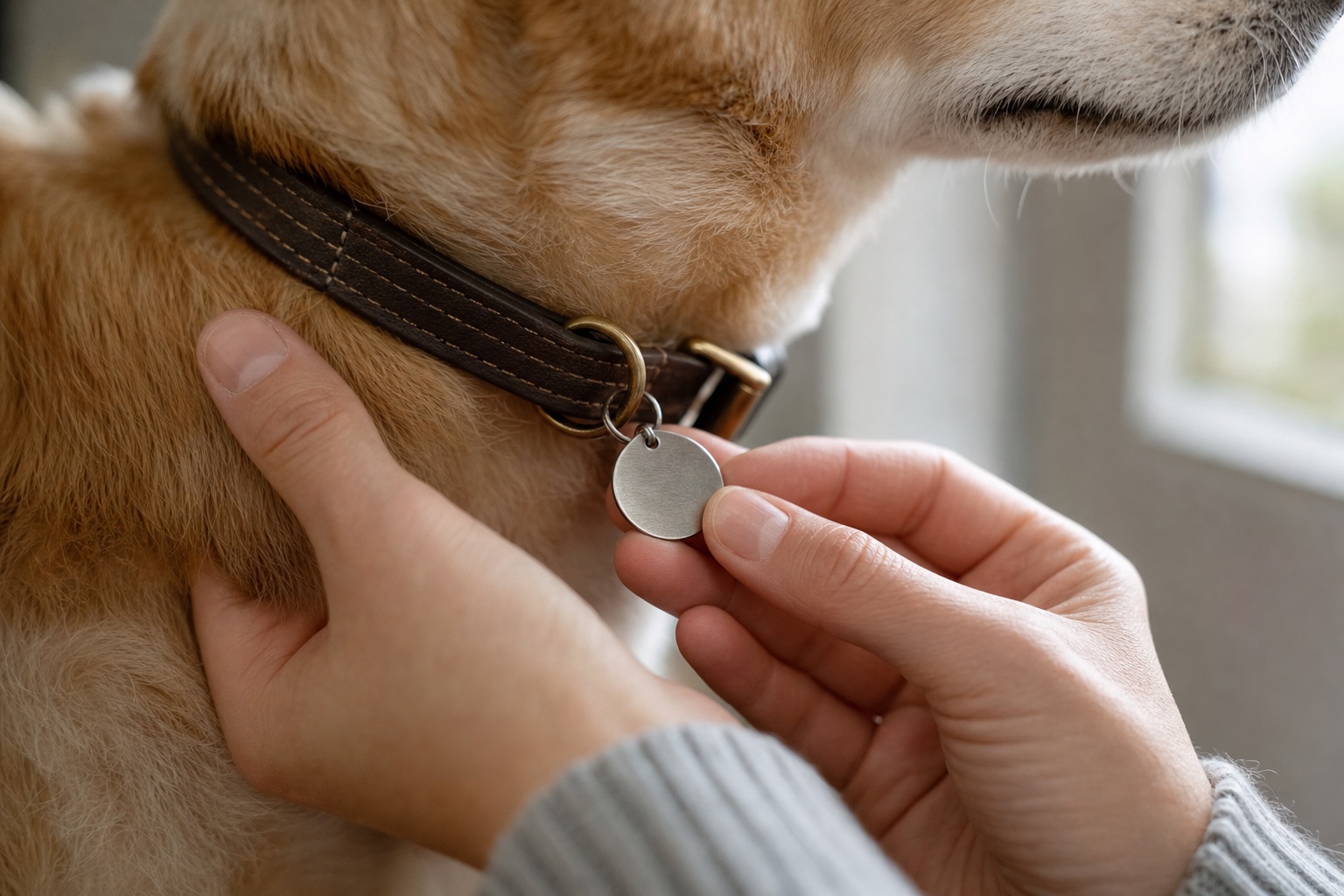
This one gets skipped, and it matters. Animal shelters commonly report an increase in lost pets around the Fourth of July, because startled dogs bolt — out an open door, off the leash, over a fence.
- Make sure your dog is wearing a collar with a current ID tag
- Confirm your microchip registration info is up to date
- Walk your dog early, before the fireworks start
- Check doors, windows, and fences for gaps or weak spots
Tire them out early
A dog with some energy already burned off tends to settle more easily. If fireworks are expected in the evening, aim for a good walk or play session earlier in the day — well before the noise is likely to start. Feeding on the earlier side can help too, since a scared dog may lose interest in dinner once the bangs begin.
Build a safe room
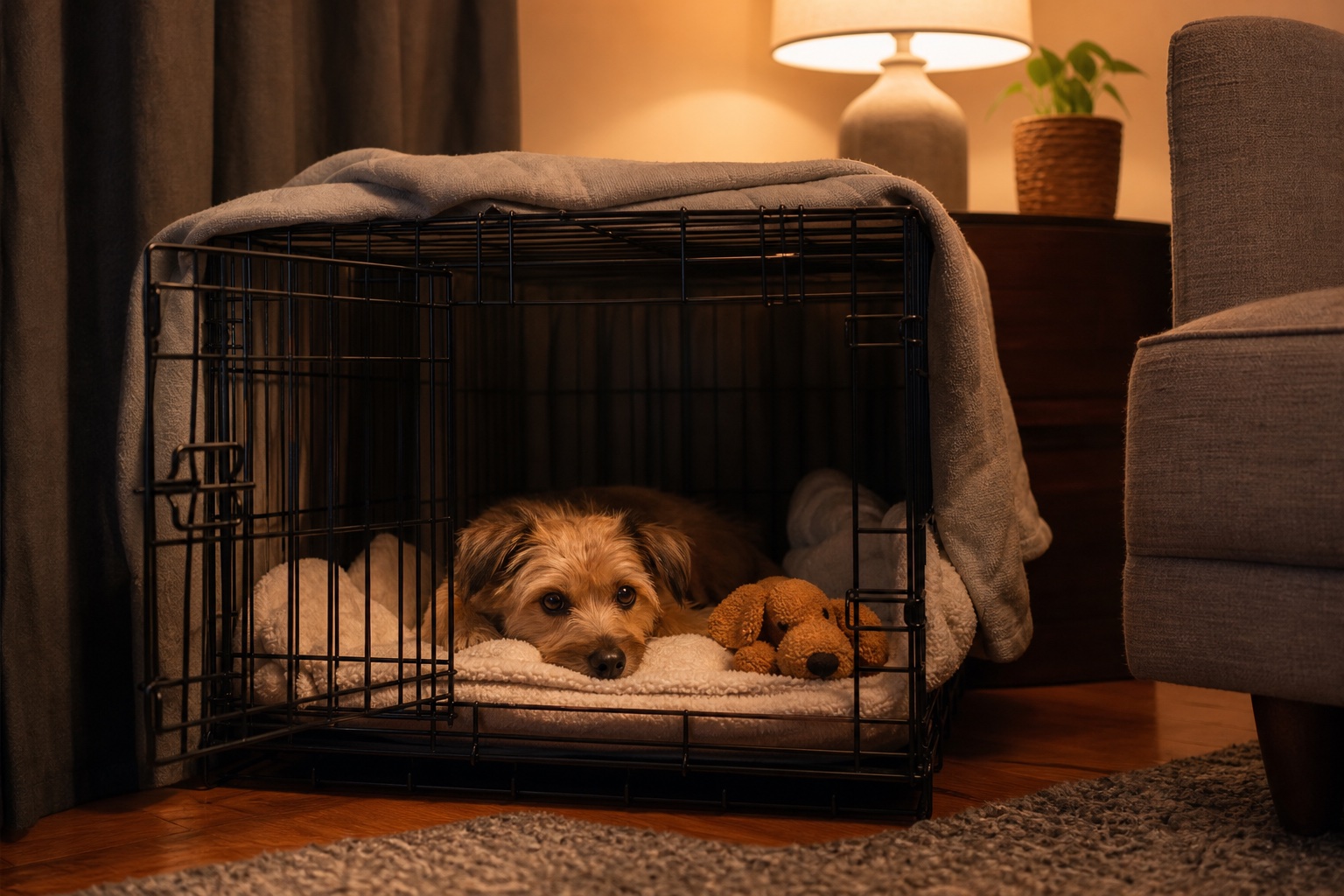
Many dogs feel calmer in a small, enclosed space.
- Set up a crate or bed in a quiet, interior room
- Add familiar blankets and a favorite toy
- Leave it open so your dog can come and go — never lock them in
Turn on white noise
Silence makes every distant bang stand out. Background sound helps smooth out the sudden ones.
- Run a fan, white noise machine, or the TV at a normal volume
- Keep it at your usual level — not blasting
During the Fireworks
When the noise starts, your instinct is to say "it's okay." Staying nearby with a calm, steady voice genuinely helps most dogs.
The catch: if you get anxious or fuss over your dog, they pick up on it. As much as you can, act like it's a normal night.
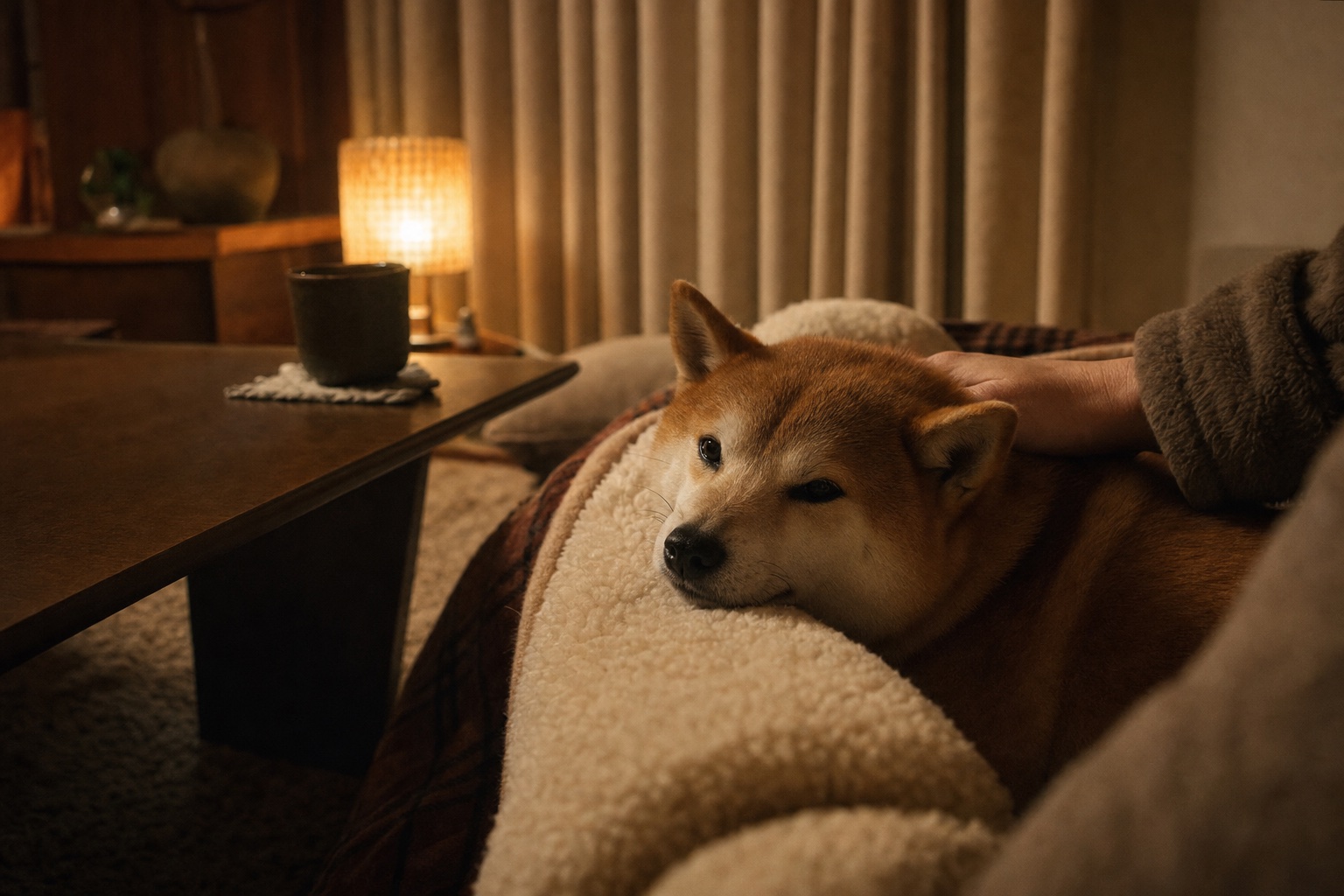
- If your dog wants company, sit with them quietly
- If they want to hide, let them — don't drag them out
- If treats or a toy help distract them, great
Every dog is different. Follow the distance your dog is asking for.
What Nobody Tells You About "Comforting" Your Dog
You won't spoil a scared dog by comforting them — that old myth doesn't hold up. Sitting calmly with a frightened dog is fine.
What actually backfires is your panic. A tense, worried owner tends to make an already-nervous dog more nervous. Calm is contagious, and so is stress.
Training: The Slow Way
Over time, some dogs can become less reactive to loud sounds. The general idea is to start small.
- Play recorded fireworks or thunder at a very low volume
- Pair the sound with something good — treats, play, calm praise
- Keep sessions short, and raise the volume only if your dog stays relaxed
Never push a scared dog through it. Cranking the volume while your dog is already frightened can make the fear worse. If your dog is highly reactive, check with a professional before trying this on your own.
What Not to Do
Good intentions can backfire. Steer clear of these.
- Punishing a scared dog for barking or accidents — it only links fear to consequences
- Forcing exposure by bringing your dog close to the fireworks to "toughen them up"
- Locking them in a crate instead of offering an open safe space
- Leaving them alone for hours on a high-anxiety night
- Giving human medication — never medicate on your own judgment
When to Call a Professional
If the panic keeps coming despite your best setup, gets worse every year, or disrupts daily life, don't just tough it out. Talk to your veterinarian, or a veterinary behavior specialist, about a plan built for your dog.
Noise fear is often manageable with the right mix of environment, training, and — when needed — professional support. The fastest route is finding what works for your dog alongside an expert.
It also helps to keep a few simple notes: which nights were hardest, what seemed to calm your dog, and whether things are trending better or worse. That kind of record gives your vet real information to work with, instead of a vague "he hates fireworks." Small details often point to the plan that finally clicks.
Frequently Asked Questions
Q: Is my dog the only one who freaks out at fireworks?
A: Not even close. Reactions to loud noise vary a lot from dog to dog, and it isn't a training failure. Some dogs are unbothered; others react strongly.
Q: Can I comfort my dog, or will that make it worse?
A: Calmly staying with your dog is fine and often helps. What matters is that you stay relaxed — an anxious owner tends to feed a dog's anxiety.
Q: My dog will be home alone when fireworks start. What now?
A: Close the windows and curtains, run some background sound, and set up a cozy safe space. For a very anxious dog, try to be home, or arrange a sitter or boarding.
Q: It seems to get worse every year. Is that normal?
A: Increasing reactions are worth taking seriously. Reach out to your veterinarian or a veterinary behavior specialist sooner rather than later.
Keep the Memories, Skip the Stress
Fireworks are a summer highlight — but for a noise-sensitive dog, they're a rough night. The kindest move is usually to leave your dog safely at home rather than bring them along.
Still, it's natural to wish you had a photo of your pup against a sky full of color. That's where PupGen comes in.
PupGen is a dog-focused AI service: upload a photo of your dog and generate images in all kinds of scenes. With the Fireworks Festival preset, you can create a shot of your dog looking happy under a burst of fireworks — no actual booms, no fear, no bolting. Your dog stays safe on the couch while the memory comes to life on screen.
New sign-ups get 15 free credits, so it's easy to try. Celebrate the season in a way that's kind to your dog.