Summer Dog Walking Guide: Timing, Hot Pavement, and Paw Care
PupGen Media
PupGen
The air temperature says 80°F. The sidewalk your dog is about to walk on could be far hotter. That gap is where most summer paw injuries happen.
Summer walks aren't just regular walks with more sunscreen. The ground gets dangerously hot, the timing matters more than usual, and some days the smartest move is not walking at all. Here's how to keep your dog comfortable and safe when the heat sets in.
The Ground Is Hotter Than the Forecast
Weather apps measure air temperature about five feet off the ground. Your dog walks right on the pavement, and that surface soaks up direct sunlight all day.
Asphalt in full summer sun commonly gets much hotter than the air temperature around it. On a hot afternoon, pavement can heat up enough to burn skin on contact. You don't notice because you're wearing shoes. Your dog is barefoot, and their face sits close to the ground, catching the radiant heat head-on.
So the question isn't "Is it 80°F today?" It's "How hot is this pavement, right now?"
It's worth knowing which surfaces behave the worst. Dark asphalt and black rubber running tracks absorb the most heat and stay hot the longest. Concrete sidewalks run cooler but can still burn on a bright day. Sand at the beach and metal surfaces like manhole covers or truck beds can get scorching fast. Grass, dirt trails, and shaded ground stay the most forgiving, which is exactly why they're worth steering toward in summer.
The Seven-Second Rule
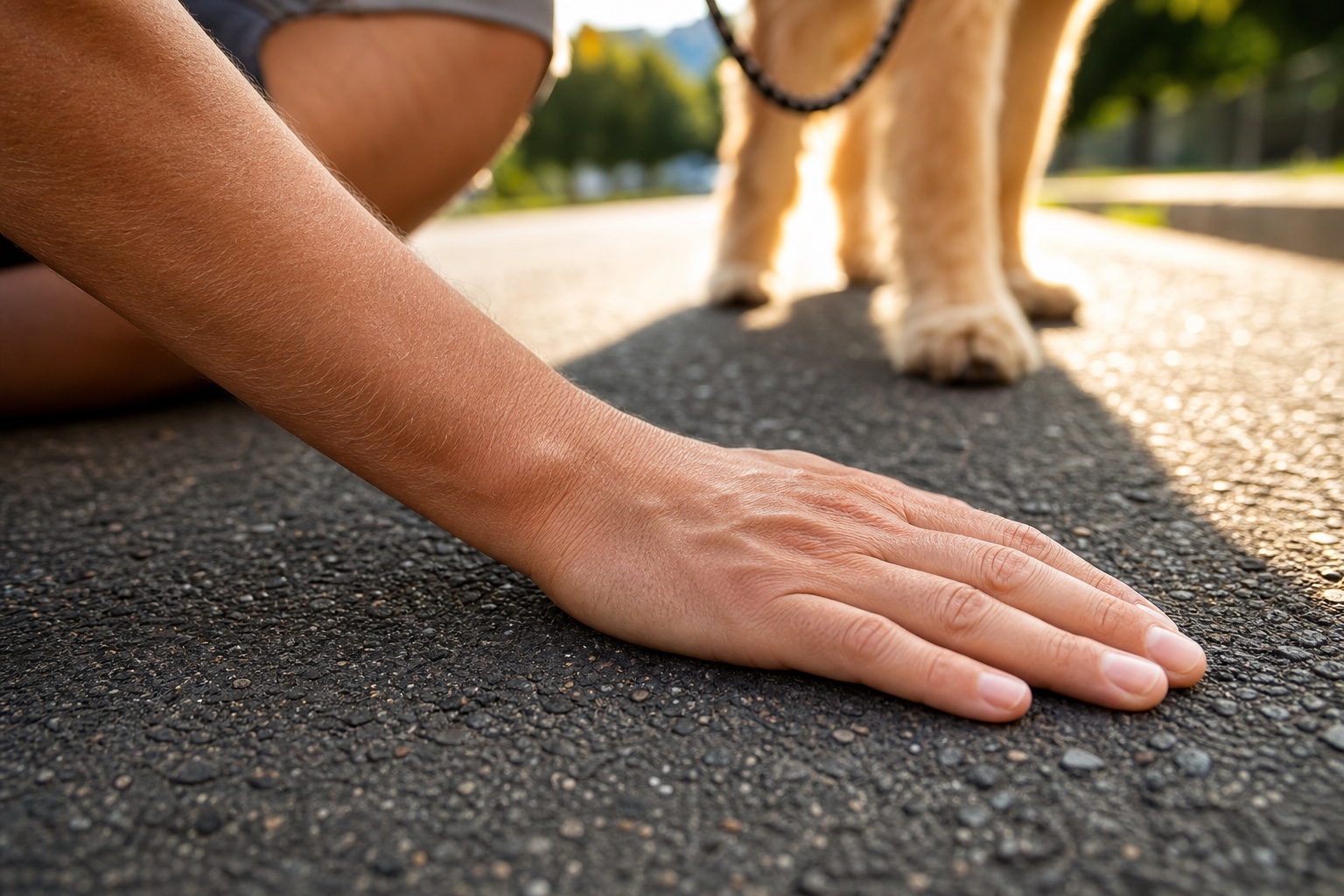
You don't need a thermometer to check the ground. A widely shared quick test is the "seven-second rule":
- Before you head out, press the back of your hand flat against the pavement.
- If you can't hold it there comfortably for seven seconds, it's too hot to walk on.
- If it's too hot for your hand, it's too hot for your dog's paws.
Use the back of your hand, not your palm. It's more sensitive and closer to how a paw pad feels the heat. It's only a rough guide, but it takes five seconds and needs no equipment, so make it a habit before every summer walk.
When to Walk: A Simple Timing Guide
In summer, when you walk matters almost more than anything else. The table below is a general guideline. Local weather varies, so always confirm with the seven-second test on the day.
| Time of Day | Rating | Notes |
|---|---|---|
| Early morning (sunrise–7 a.m.) | Best | Coolest air, ground still cool from overnight |
| Morning (7–9 a.m.) | Okay if early | Wrap up before the heat climbs |
| Midday (10 a.m.–4 p.m.) | Avoid | Pavement is hottest; risky even briefly |
| Evening (4–6 p.m.) | Check first | Air cools but pavement often stays hot |
| After sunset (7 p.m.+) | Best | Let the ground cool down first |
The trap most owners fall into: evening feels safe because the air has cooled, but asphalt holds the day's heat for hours. "It's cooler now" doesn't mean the ground is.
Not Every Dog Handles Heat the Same
Timing guidelines are a starting point, but your dog's own profile matters too. Flat-faced breeds like Bulldogs, Pugs, and Boxers have a harder time cooling themselves through panting, so they tend to feel the heat sooner. Very young puppies and senior dogs regulate their body temperature less efficiently. Dogs carrying extra weight, or those with thick double coats, also work harder in the heat. If your dog falls into any of these groups, lean toward the coolest windows and shorter outings, and watch them a little more closely.
Hot Pavement and Paw Burns
Walking on hot ground can burn a dog's paw pads. After a walk, watch for these signs:
- Red, discolored, or darkened pads
- Constant licking or chewing at the paws
- Limping or refusing to put a paw down
- Blisters or peeling skin on the pads
If you notice any of these, don't try to treat a serious burn yourself — contact your vet.
How to Protect Those Paws
- Choose your surface: walk on grass, dirt paths, and shade instead of open asphalt.
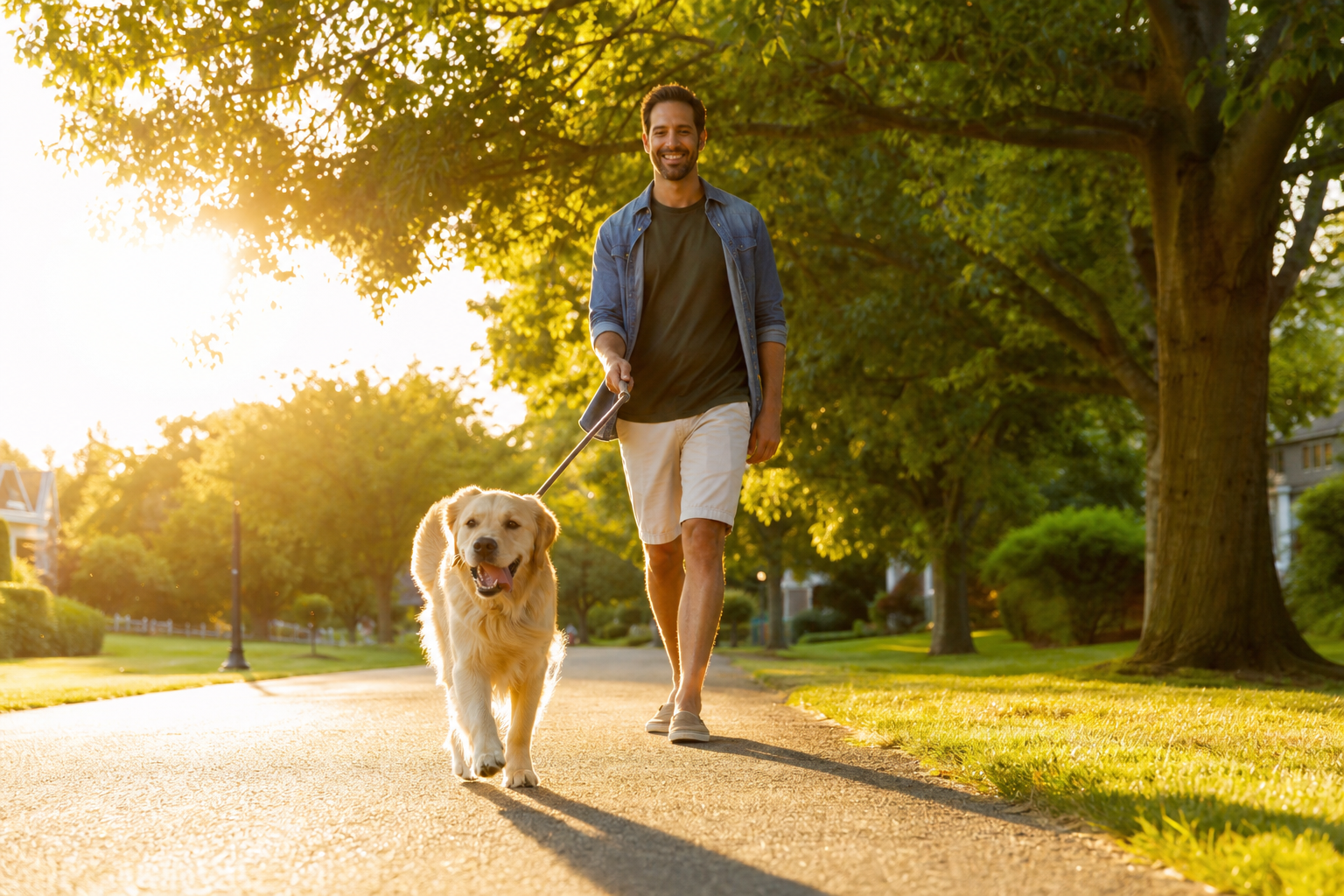
- Stick to the shady side of the street; it makes a real difference in ground temperature.
- Shift your timing to the cooler windows above.
- Use gear: dog booties or a protective paw balm add a barrier.
- Carry over hot stretches: it's fine to pick up a small dog across a scorching patch.
Paw Care Basics for Summer
Healthy pads handle heat and rough ground better, so a little upkeep goes a long way.
- After walks, wipe the pads with a damp cloth to clear grit and cool them down.
- If the pads look dry or cracked, use a dog-specific paw balm.
- Check the pads before and after each walk for redness, cuts, or debris.
Skip human hand creams — some ingredients aren't suited for dogs, and licking is inevitable. If a problem lingers, ask your vet.
What to Pack for a Summer Walk
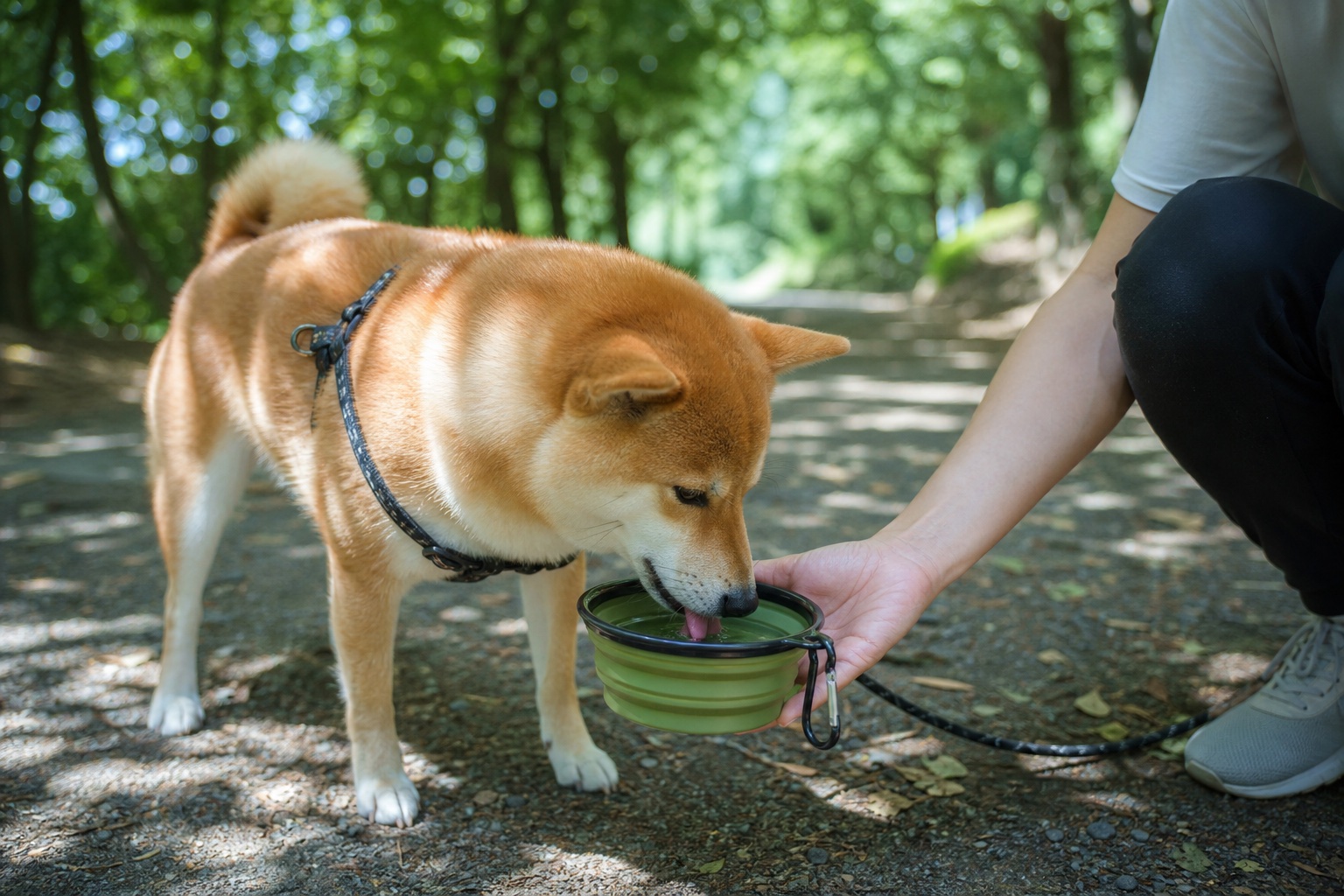
The right kit changes a hot walk from risky to relaxed.
- [ ] Fresh water (bring extra)
- [ ] A collapsible bowl or travel water bottle
- [ ] A cooling towel or bandana
- [ ] Waste bags and wipes
- [ ] A damp towel to cool the paws or body
- [ ] A shorter leash so you can steer toward shade
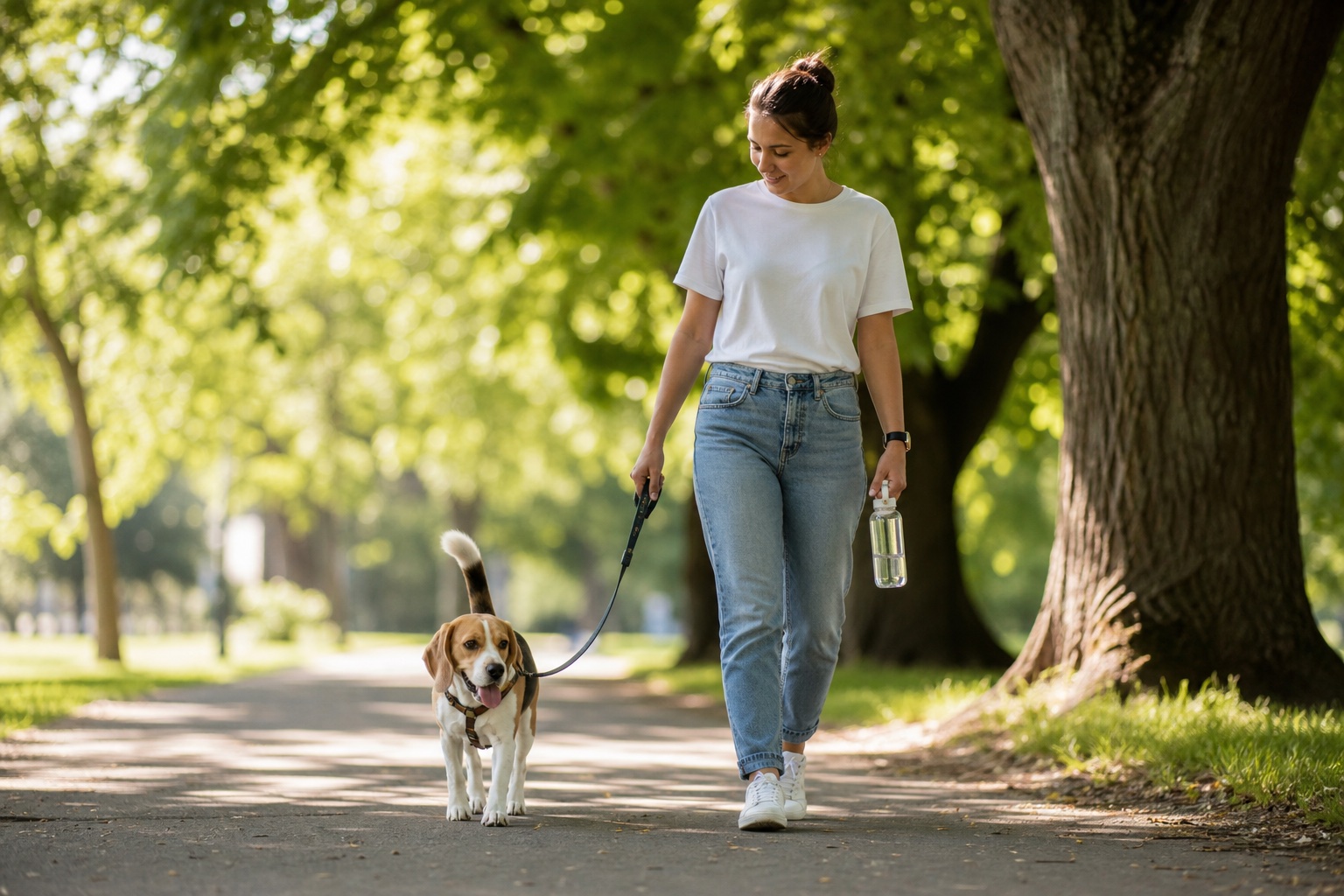
Hydration comes first. Even on a short walk, be ready to offer water often, and try to pause in the shade every so often rather than pushing straight through. A cooling towel draped over the neck or laid down for a quick rest can help your dog shed heat between stretches. If you're heading somewhere new, it's worth planning a route that passes trees, parks, or buildings that throw shade, so you're never caught out in full sun with nowhere to cool off.
Recognizing When Your Dog Is Overheating
Even with good timing, dogs can struggle in the heat. General signs that a dog may be getting too hot include heavy or frantic panting, drooling more than usual, bright red gums or tongue, sluggishness or stumbling, and a reluctance to keep moving. Dogs cool themselves mainly by panting, so humid, still days are especially hard on them.
If you see these signs, move your dog to shade or a cool indoor space, offer water, and contact your vet immediately. Overheating can become serious quickly, and it's always better to check with a professional than to wait and see.
"Not Today" Is a Valid Choice
Some summer days, the kindest thing is to skip the outdoor walk. When the pavement is scorching or it's humid with no breeze, cut the walk short — or burn off energy indoors instead.
Indoor Ways to Tire Your Dog Out
- Nose work: hide treats around a room and let your dog sniff them out.
- Puzzle toys: stuff a toy with food for slow, focused play.
- Training refreshers: run through sit, down, and stay to work the brain.
- Tug or hide-and-seek: light movement in a cool room.
Mental work tires dogs out more than people expect. Skipping a walk on a brutal day isn't neglect — it's just swapping the menu.
A Cool Shot, Even in Peak Summer
When it's too hot to get out with a camera, a mountain getaway photo of your dog feels out of reach. That's where PupGen's AI image generation helps: the "Summer Highland" preset places your dog in a crisp, cool landscape — a seasonal keepsake made from the comfort of an air-conditioned room. New sign-ups get 15 free credits, so give it a try for free.
Frequently Asked Questions
Q: When is the best time to walk my dog in summer?
A: Early morning around sunrise and after sunset are generally considered the coolest windows, when the ground has had time to cool. Don't rely on the clock alone, though — always check the pavement temperature on the day.
Q: How exactly does the seven-second rule work?
A: Press the back of your hand to the pavement before your walk. If you can't hold it there for a full seven seconds, it's too hot for your dog's paws. It's a rough guide, so if it feels hot at all, play it safe and wait.
Q: Do I need to buy dog booties?
A: They're one option for hot surfaces or longer walks, but many dogs need time to get used to them. Introduce them in short sessions. For most owners, choosing cooler times and softer surfaces like grass matters more.
Q: My dog's paw looks red after a walk. What should I do?
A: Redness, discoloration, or blistering can signal a burn. Burn severity is hard to judge by sight, so don't treat it yourself — contact your vet for guidance.