Dog Water Safety in Summer: Beach, Lake, and Pool Guide
PupGen Media
PupGen
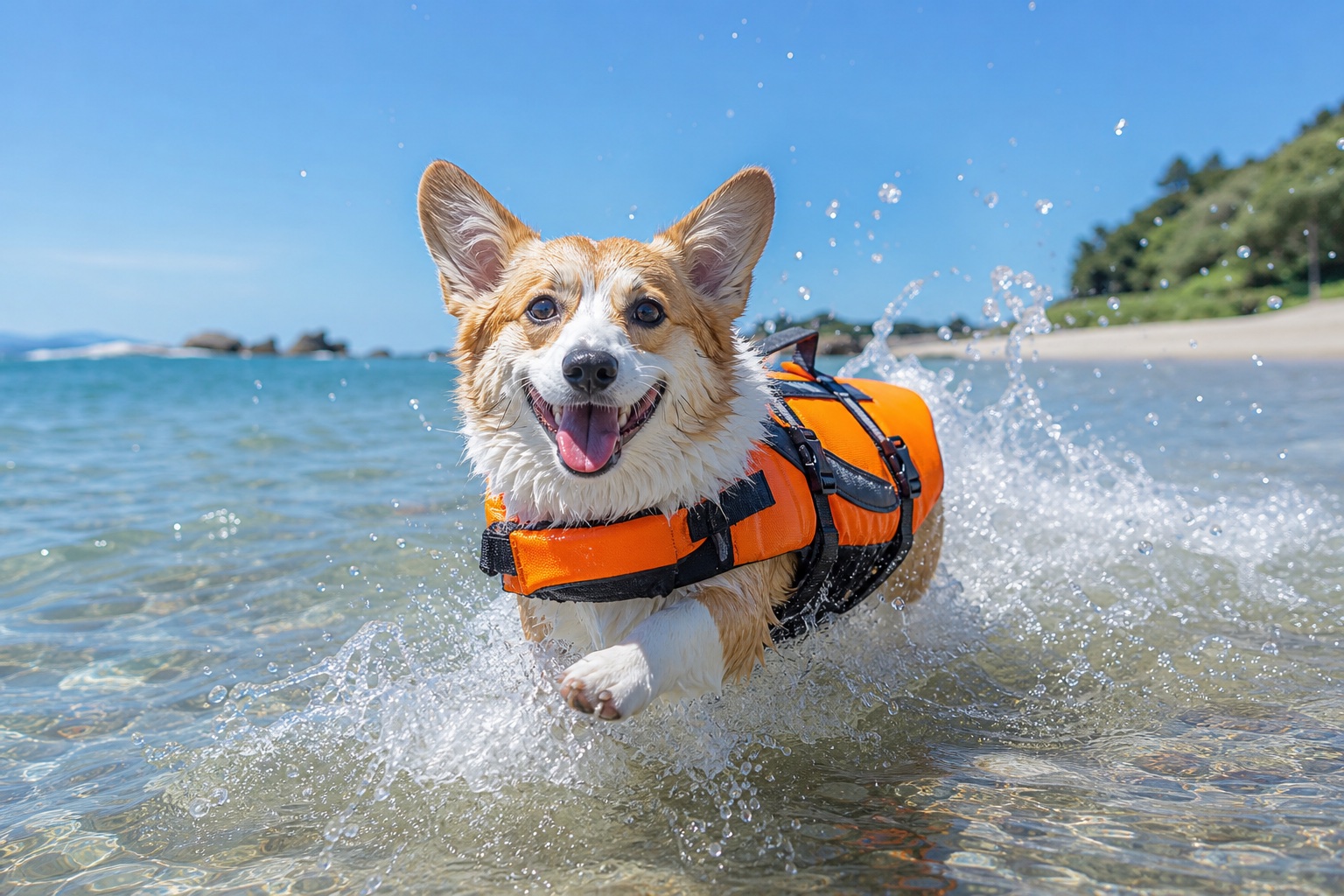
Your dog can swim. Whether your dog should swim in this particular spot, right now, is a completely different question.
Summer water play is one of the best things you can share with your dog. It cools them down, burns off energy, and turns an ordinary afternoon into something memorable. But the water hides risks that a normal walk never does, and those risks change depending on where you are. A calm lake, an open beach, and a backyard pool each ask something different from you.
Here's what actually keeps a dog safe around water, broken down by location, plus the gear worth packing and the after-swim care most people skip.
First: Some Dogs Aren't Built for Swimming
The idea that every dog is a born swimmer is a myth worth retiring.
Generally speaking, body shape tends to influence how easily a dog swims. Dogs with long legs and lean, buoyant bodies often take to water naturally. Flat-faced (brachycephalic) breeds like Pugs and French Bulldogs, and long-bodied, short-legged breeds, are generally considered to have a harder time in the water. Breathing and balance are thought to play a role.
That's a general tendency, not a rule. Plenty of flat-faced dogs love a splash, and plenty of athletic-looking dogs want nothing to do with deep water. Judge the dog in front of you, not the breed stereotype. Start in the shallows, let them get their paws wet, and build from there. Never force a nervous dog into the water.
Beach, Lake, and Pool: What Changes
The Beach: Salt Water, Waves, and Heat
Open and exciting, but also the most intense environment for a dog.
- Salt water intake. Dogs caught up in the fun often swallow sea water without meaning to. Too much salt is generally considered hard on a dog's system, so offer fresh water frequently to keep them from drinking the salty stuff.
- Waves and currents. Even small waves push hard against a dog. Deeper, pulling currents (more on rip currents below) are a serious hazard.
- Hot sand. Midday sand can get startlingly hot. Press the back of your hand to it for a few seconds first, if it's too hot for you, it's too hot for their paw pads.
- Heat. Heat exhaustion is a real risk even by the water. Bring shade and plenty to drink.
The Lake: Calm on Top, Tricky Underneath
Lakes and ponds look gentle, which is exactly why people let their guard down.
- Blue-green algae. Some still, warm freshwater can develop blue-green algae (cyanobacteria), which is generally considered dangerous to dogs. As a general precaution, avoid water with scummy, paint-like, or greenish film on the surface, and don't let your dog drink from or swim in it. When in doubt, stay out.
- Hidden depth and drop-offs. The bottom can fall away quickly, and dogs can't judge depth from the surface.
- Underwater hazards. Submerged branches, weeds, and slick rocks are hard to see.
- Colder deep water. Deeper layers can be much colder than the surface, which can tire a dog quickly.
The Pool: Rules and Exits
A controlled environment feels safer, and often is, but two things matter most.
- A way out. Dogs can't hoist themselves over a pool edge the way people grab a ladder. Make sure there's a ramp, steps, or a shallow exit they can use on their own, and show it to them before they get in.
- Chlorine. Discourage gulping chlorinated water by keeping fresh water nearby. Rinse them off afterward (see below).
- Supervision. Never leave a dog unattended near a pool, even a strong swimmer.
The Backyard Kiddie Pool
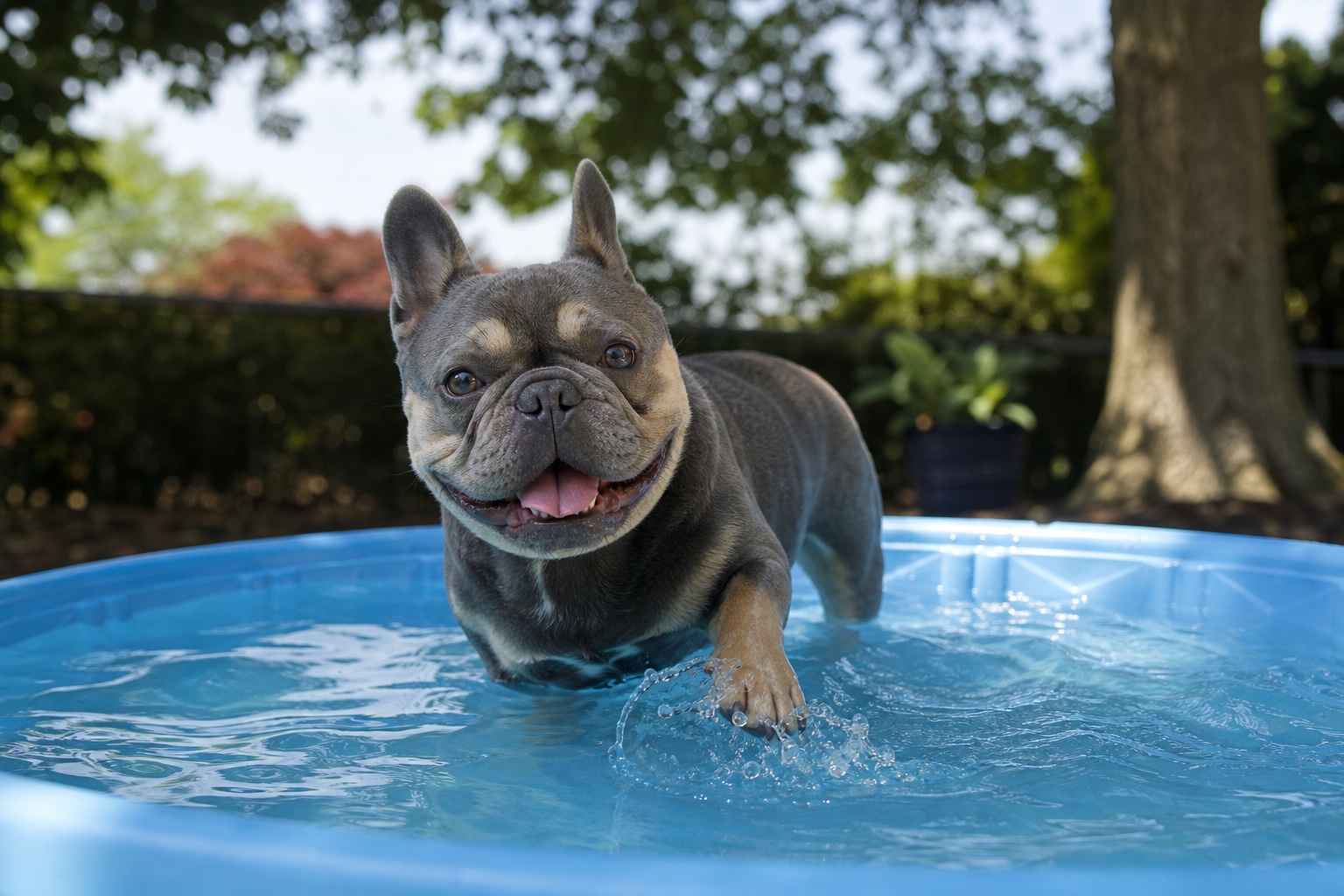
A small hard or inflatable pool is a great way to introduce water. Just don't assume "shallow" equals "safe."
- Change the water. Standing water warms in the sun and grows bacteria. Refill with fresh water for each session.
- Keep it shallow. Belly-deep is plenty.
- Watch the heat. The pool material and water surface can get hot. Set it in the shade.
- Stay close. Dogs can get into trouble even in a few inches of water. Supervise every time.
Gear Checklist
Before you head out, this is the short list worth having on hand.
| Item | Why it matters |
|---|---|
| Fresh water (plenty) | For drinking and for rinsing off, extra for beach and lake days |
| Collapsible bowl | Easy, frequent water breaks |
| Life jacket | For nervous swimmers or deep/moving water |
| Towels (several) | Drying off and a dry spot to rest |
| Shade (tarp or pop-up) | Water doesn't cancel out sun and heat |
| Leash / long line | Match the venue's rules and the setting |
| Waste bags | Basic courtesy, always |
| Basic first-aid kit | Gauze, bandages, the small stuff |
| Cooling gear | Cooling mat or wrapped ice pack |
Adjust it to your dog and your destination, and add your own must-haves.
How to Choose a Life Jacket
Even a confident swimmer is safer in deep or moving water with a jacket on. The basics:
- Fit. Too loose and it slips off or restricts movement. Measure chest girth, neck, and weight, and size to your dog.
- Buoyancy placement. Flotation under the belly and chin helps a dog keep their nose naturally above the surface.
- A grab handle. A sturdy handle on the back makes lifting your dog out fast and easy if you need to.
- Easy on and off. Check how quickly you can get it buckled and unbuckled.
- Practice first. Let your dog wear it on land and move around in it before the real thing.
Know the "Stay Out" Signs
Sometimes the right call is to skip the water entirely. Turn back if you see:
- Rip current signs. At the beach, a channel of water that looks different in color, or a stretch that's flat and moving out to sea, can pull swimmers offshore. It's generally considered dangerous, keep both of you well away.
- Rising or fast water. Cloudy, faster, or higher water, especially if the weather upstream or overhead looks bad.
- Blue-green algae or odd water quality. Scummy film, unusual color, or a strange smell on still water. Stay out.
- Dog-restricted areas. Many beaches, lakes, and parks set aside zones where dogs aren't allowed. Always check the local rules for where you're going.
When in doubt, sit it out. That instinct protects your dog.
After-Swim Care
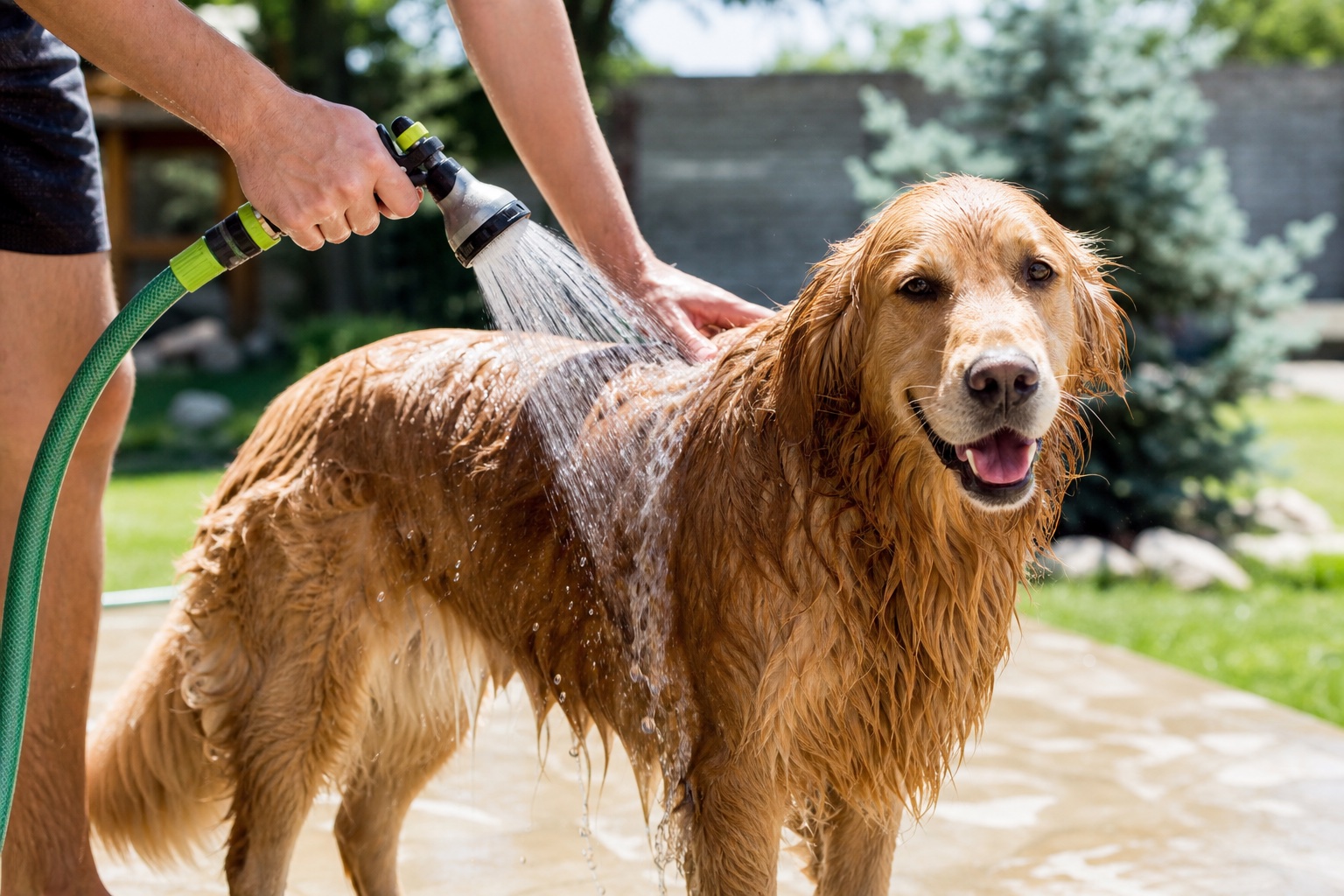
A few minutes of care afterward prevents most skin and ear problems.
Rinse and Dry
- Rinse with fresh water. Salt, lake water, and chlorine left on the coat can lead to itching and skin irritation. Rinse the whole body with clean water.
- Dry thoroughly. A damp coat traps moisture against the skin, where bacteria thrive. Towel dry, then finish drying down to the skin if needed (low heat, at a distance your dog is comfortable with).
Ears
- Dry the ears. Water gets trapped in the ear canal during swimming. Floppy-eared dogs hold moisture especially well, which is generally considered a setup for ear infections.
- Gently, no deep poking. Wipe only what you can see with cotton or a soft cloth. Don't push anything into the canal.
- See a vet for anything off. Persistent scratching, head shaking, odor, or redness means it's time to call your veterinarian.
Full-Body Check
After play, check the paw pads for cuts, look for anything stuck in the coat, and watch for signs of overtiredness. If your dog seems lethargic, is shivering, or has vomiting or diarrhea, don't wait it out, contact your veterinarian right away.
Frequently Asked Questions
Q: My dog can't really swim. Can we still enjoy the water?
A: Absolutely. There's no need to force swimming. Wading in the shallows or splashing in a kiddie pool counts as water play. Go at your dog's pace and help them learn that water is comfortable, not scary.
Q: What about puppies and senior dogs?
A: Don't overdo it, they handle temperature and exertion less easily. Keep sessions short, and break often for rest and water. If your dog is very young, older, or has a health condition, check with your veterinarian before water outings.
Q: My dog swallowed some sea water. Is that a problem?
A: A small amount isn't necessarily an emergency, but too much salt is generally considered hard on a dog. Offer fresh water and watch them. If you see vomiting, diarrhea, or low energy, contact your veterinarian right away.
Q: Do I have to shampoo my dog after every swim?
A: Not every time, but do rinse salt, lake water, and chlorine off with fresh water, then dry down to the skin to help prevent irritation. If your dog has sensitive skin, ask your veterinarian how often bathing makes sense.
For the Dog Who'd Rather Stay Dry
Maybe your dog takes one look at the water and decides today is a land day. That doesn't mean missing out on a summery photo.
With PupGen, an AI image generator for dogs, you upload a photo of your dog and create a summer scene without anyone getting wet. The Pool & Water Play and Beach & Swimming presets turn even a water-shy pup into the star of a cool, sunny shot, and you can make combined photos of you and your dog together.
There are plenty of other presets too, from sunflower fields to fireworks. New sign-ups get 15 free credits to start, so try it out and save a summer memory, whether or not your dog ever touches the water.
Here's to a safe, splash-filled summer with your best friend.